

“You matter, even when nobody has said it loudly enough …”
In several communities throughout South Africa, dignity campaigns serve as vital lifelines for young girls – offering sanitary products, support, and reassurance during difficult circumstances. But for Bokang Jackson Morure, one question kept weighing on him: what about the boys?
“Many boys are struggling quietly, not because they do not need support, but because society has not created enough safe spaces for them to ask for help.”
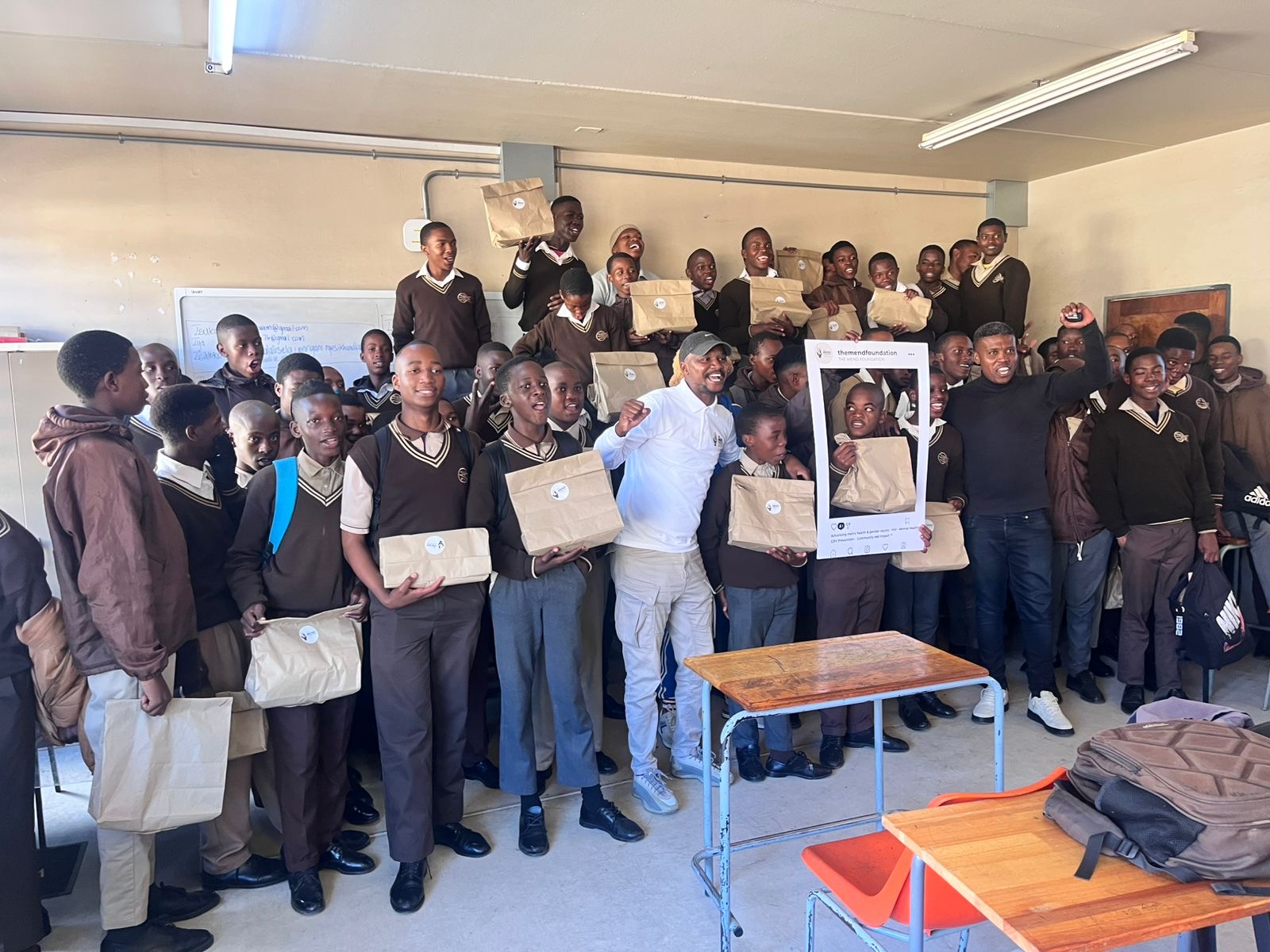
In response to this reality, The Gentleman’s Drive was born, an initiative by the MEND Foundation aimed at supporting high school boys by providing dignity packs, mentorship and dialogue around emotional wellbeing, discipline, confidence, and positive masculinity.
The Founder and CEO of the MEND Foundation, Bokang Jackson Morure, is a public health professional, advocate for men’s health, and community development practitioner whose background includes HIV, TB, mental health, and health systems strengthening.
He explains that the initiative was born after noticing a recurring gap in community support programmes.
“Many dignity initiatives rightly support girls, especially through sanitary dignity programmes, but boys are often left out of similar conversations and support systems,” he said.
“I realised that if we want to build healthier communities, we cannot only intervene when boys become men. We must reach them early, guide them, affirm them, and give them the basic tools to carry themselves with dignity.”
Morure said he observed that while girls were receiving structured support through many school and community donation drives, boys were often expected to simply cope on their own without similar backing.
“Yet many of them also come from homes where even basic hygiene items are not guaranteed,” he said.
“That silence around boys’ needs stood out to me. It made me realise that some boys are struggling quietly, not because they do not need support, but because society has not created enough safe spaces for them to ask for help.”

Through The Gentleman’s Drive, boys are provided with dignity packs that include soap, toothpaste, toothbrushes, roll-on deodorant, and face cloths. However, Morure pointed out, the purpose of the initiative reaches much further than just hygiene essentials.
“Because dignity is not only about what a boy receives in a pack. It is also about how he sees himself,” he said.
“The hygiene pack meets an immediate practical need, but the mentorship conversation speaks to the deeper issue. We want boys to understand that cleanliness, discipline, emotional awareness, respect, accountability, and confidence are all part of becoming a responsible young man.”
According to Morure, many boys in disadvantaged communities often contend with poverty, absent or overstretched parental support, peer pressure, low self-esteem, violence, and a shortage of positive male role models to look up to.
“Some boys are also carrying emotional pressure at an early age. They are told to be strong, but not taught how to express pain, ask for help, manage anger, or build healthy relationships,” he said.
“That silence can become dangerous if it is not addressed early.”
At the heart of the campaign is a message about character and accountability.
“To us, being a gentleman is not about status, money, or looking perfect. It is about character,” said Morure.
“A gentleman is respectful, disciplined, emotionally aware, accountable, and protective without being controlling. He respects women and girls, values himself, takes responsibility for his choices, and contributes positively to his community.”
He explains that one of the most touching parts of the programme is seeing boys becoming more willing to open up during sessions.
“At first, some boys may be shy or reserved, but once they realise that the space is for them, they open up,” he said.
“Many are grateful for the dignity packs, but what often touches them most is being seen, spoken to, and taken seriously. For some boys, it may be the first time someone has intentionally said, ‘You matter, your future matters, and you are not alone.’”
Morure described the initiative as serving both a dignity campaign and a prevention strategy. “Practically, it means we are responding to immediate needs while also preventing future harm,” he said.
“The dignity campaign provides hygiene essentials and restores a sense of self-worth. The prevention strategy addresses the root issues that can later show up as violence, poor health-seeking behaviour, substance abuse, unhealthy relationships, or emotional breakdown.”
“We are not only giving boys products. We are planting values, awareness, and support systems early.”
He is of the belief that if communities are seeking less gender-based violence and healthier relationships, boys need support before reaching critical breaking points.
“Safer communities are not built only through punishment after harm has happened,” he said.
“They are built through prevention, education, mentorship, and positive role modelling. If we want less gender-based violence, healthier families, and stronger communities, we must invest in boys before crisis points.”
Even with the growing need, Morure said one of the biggest challenges remains the shortage of resources and funding.
“There is a huge need, but limited funding and support to reach every school and community that could benefit,” he said.
“Another challenge is changing the mindset that boys do not need support. Many people only focus on boys when they are seen as a problem. We want society to also see boys as people who need guidance, care, structure, and positive investment.”
Looking ahead, Morure hopes to grow The Gentleman’s Drive into a national movement reaching schools, communities, churches, and correctional settings across South Africa.
“We want to create programmes that do not only inspire people for one day, but build long-term behavioural and community change,” he said.
And for boys who may be carrying their struggles silently, he shared one final message:
“You matter, even when nobody has said it loud enough.”
“Your current situation is not your destination. Do not suffer in silence. Speak to someone you trust. Ask for help. Take care of your body, your mind, and your future. Being strong does not mean hiding pain; sometimes strength is having the courage to speak, learn, grow, and choose a better path.”
By Sinentlahla Mbokwe


